
The Maṅgala-caraṇa of the Nāṭyaśāstra: Brahmā, Śiva and the Divine Origins of Dance
The opening verse connects the Nāṭyaśāstra with two divine traditions: Brahmā’s creation of Nāṭya and Śiva’s contribution of Nṛtta. It introduces the relationship between drama, dance, rhythm and the experience of life.
The Maṅgala-caraṇa: The opening invocation
The first verse of the Nāṭyaśāstra is indeed a significant invocation, known as the Maṅgala-caraṇa:
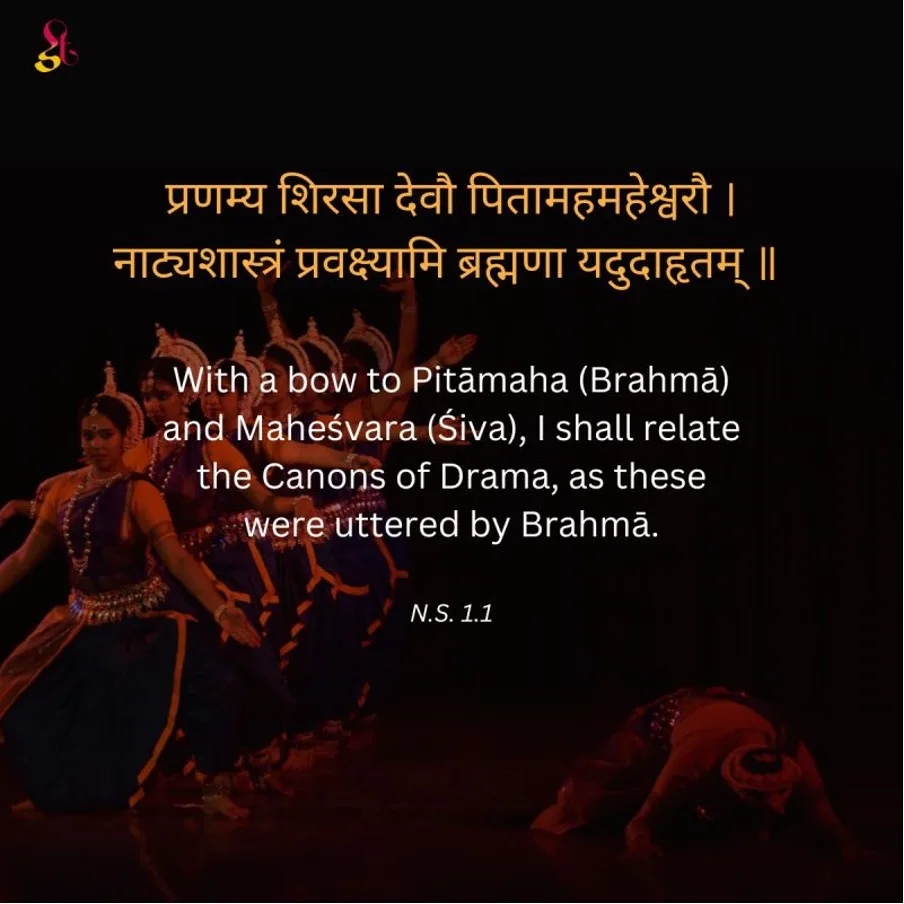
प्रणम्य शिरसा देवौ पितामहमहेश्वरौ ।
नाट्यशास्त्रं प्रवक्ष्यामि ब्रह्मणा यदुदाहृतम् ॥ १॥
Translation: With a bow to Pitāmaha (Brahmā) and Maheśvara (Śiva), I shall relate the Canons of Drama, as these were uttered by Brahmā.
The Brahma and Shaiva traditions in the Nāṭyaśāstra
This verse beautifully bridges two rich traditions:
Brahma Tradition: Brahmā, the grand creator, bestowed upon us the Nāṭyaveda, integrating elements from the four Vedas to form a comprehensive guide to drama. This tradition underscores the holistic nature of Natya, reflecting the diversity and intricacies of life and the universe.
Shaiva Tradition: Śiva, as Natarāja, the cosmic dancer, symbolizes the dynamic forces of creation and destruction through his divine dance. He imparted the art of Nṛtta (pure dance), characterized by rhythm and movement, illustrating the vibrant and ever-changing essence of existence. Śiva is credited with imparting the art of Nṛtta, which includes the Karanas (basic dance units) and Aṅgahāras (combinations of dance units).
Read about the expressive dimensions of Indian classical dance→
The story of Śiva, Tandu and the introduction of Nṛtta
The Short Story: Initially, the first presentation of Nāṭya lacked Nṛtta (pure dance – Tandav and Lasya). Recognizing this, Śiva suggested its inclusion and instructed his disciple Tandu to teach Nṛtta to Bharata Muni and his disciples. This addition brought rhythm and movement to the performance, symbolizing the vibrant and dynamic essence of existence.
Nāṭya as a reflection of life
As we bow to these divine origins, we embrace the understanding that Nāṭya is not merely an art form but a reflection of life itself—crafted by the divine hands of Brahmā and energized by the cosmic dance of Śiva.
How do you see the interplay of creation and rhythm in your own field of work?
How Abhinaya communicates knowledge through performance→
Frequently Asked Questions
1. What is the significance of the opening verse of the Nāṭyaśāstra?
The opening verse, known as the Maṅgala-caraṇa, pays homage to Brahmā and Śiva and introduces the Nāṭyaśāstra through the traditions associated with both deities.
2. What is the connection between Brahmā and the Nāṭyaveda?
Brahmā is traditionally credited with creating the Nāṭyaveda by integrating elements from the four Vedas, establishing Nāṭya as a comprehensive art form that reflects life and the universe.
3. What is Nṛtta, and how is it connected to Śiva Natarāja?
Nṛtta refers to pure dance, emphasising rhythm and movement. Śiva, as Natarāja, is associated with the cosmic dance and is credited in the narrative with introducing Nṛtta into Nāṭya through Tandu.
4. What are Karanas and Aṅgahāras in the Nāṭyaśāstra tradition?
Karanas are basic dance units, while Aṅgahāras are combinations of these units. They are associated with the tradition of Nṛtta and the systematic treatment of movement in Indian classical dance.
5. How can the Nāṭyaśāstra connect Indian Knowledge Systems with personal growth?
The Nāṭyaśāstra offers a way to explore how drama, dance, rhythm and human experience intersect. Engaging with such artistic traditions can deepen cultural understanding and encourage reflection on the relationship between creativity, expression and life.
Disclaimer: The views/opinions expressed in this article belong to the author. Bhogya.online is neither responsible nor liable for the accuracy, completeness, suitability, or validity of any information in the article.

Upasana Tendulkar
This could also be interesting....

Share this:
- Share on Facebook (Opens in new window) Facebook
- Share on LinkedIn (Opens in new window) LinkedIn
- Share on Pinterest (Opens in new window) Pinterest
- Share on WhatsApp (Opens in new window) WhatsApp
- Share on Reddit (Opens in new window) Reddit
- Share on Telegram (Opens in new window) Telegram
- Share on X (Opens in new window) X
- Email a link to a friend (Opens in new window) Email
- More