
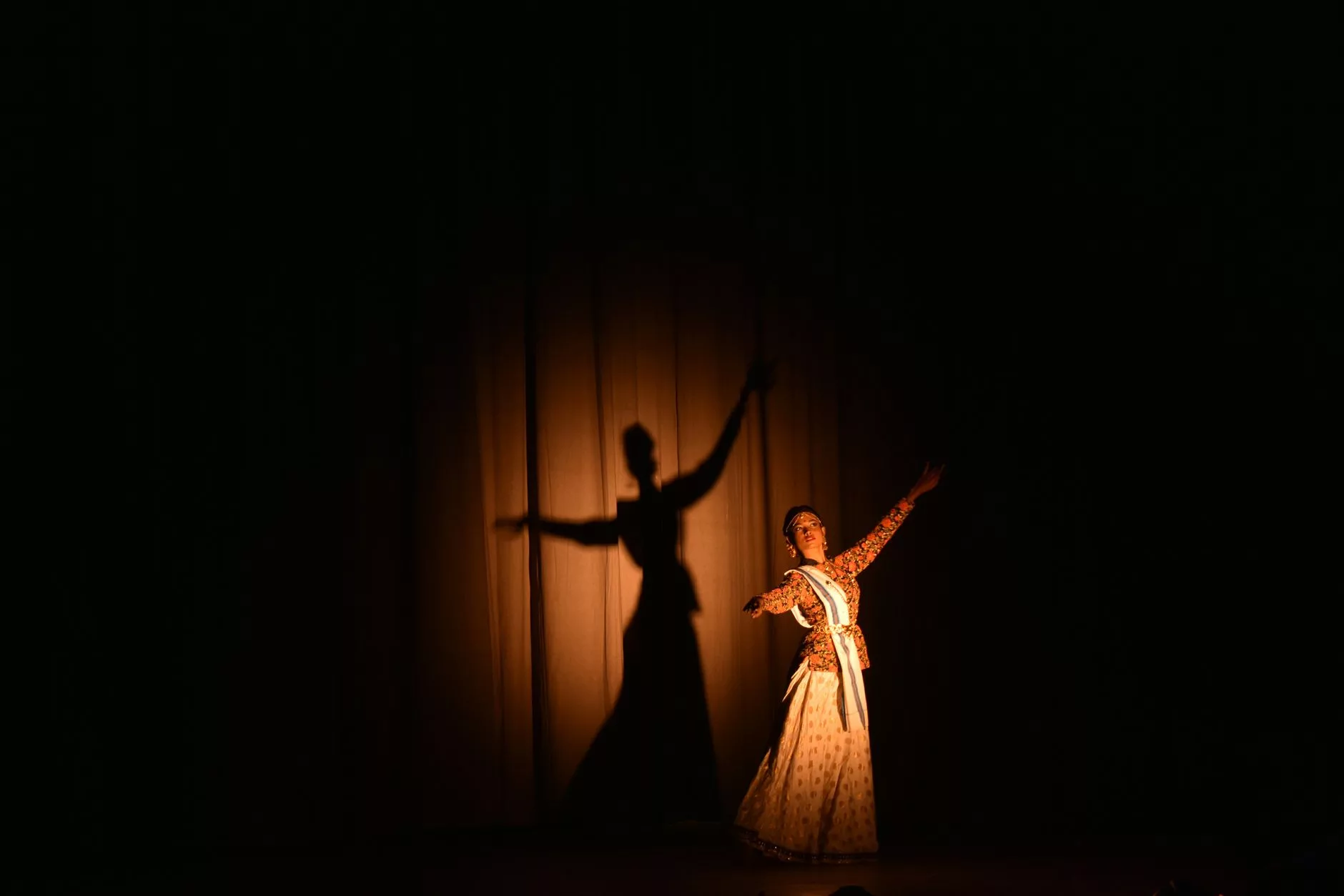
It often happens that a movie is released and a debate ensues about its quality, despite having a reputable director, talented actors, a substantial budget, and extensive promotions. Why does this controversy arise, as often seen with recent Bollywood movies (though not generalizing the fact)?
According to the Natyashastra, anything audio-visual in nature that adheres to its principles is considered Natya. This encompasses movies, plays, VR, AR, and more. However, the crucial point is that it must follow these principles to be considered true Natya:
1. Loka (लोक) – Reflecting the Patterns of Life
It should mirror the patterns of life in the three worlds (Deva, Martya/Bhumi, Patala), reflecting universal truths and experiences.
2. Veda (वेद) – Providing Knowledge
It must provide knowledge that is easily understandable, enlightening the audience.
3. Adhyatma (अध्यात्म) – Elevating the Inner Self
It should elevate the inner self, offering a deeper spiritual experience.
4. Aswadyatva (अस्वाद्यत्व) – Worthy of Being Tasted and Appreciated
It must possess the worthiness of being tasted and appreciated, enriching the audience.
Sarvavarnika (सर्ववर्णिक) – Knowledge for All
Additionally, Sarvavarnika (सर्ववर्णिक = Sarva: all, Varna: Levels; emphasizing on the unity in diversity in ancient times) emphasizes that knowledge should be inclusive and accessible to all, not exclusive.
Is All Entertainment Truly Beneficial?
Not everything consumable is beneficial. Just as consuming poison is harmful despite being consumable, not all forms of entertainment are uplifting.
True Rasas should not only entertain but also elevate and enlighten the mind and spirit.
Evaluating Modern Cinema Through the Natyashastra Lens
When we watch a movie, perhaps we can look beyond its production value, star cast, technical excellence, or box-office success. We can ask whether the work reflects life, provides meaningful knowledge, enriches the audience, elevates the inner self, and remains accessible and relevant to people.
This offers a different way of looking at modern cinema through the principles of the Natyashastra. The question is not merely whether a film is entertaining, but whether the experience leaves the audience enriched and elevated.
Let’s strive to create and appreciate art that resonates with these timeless principles, enriching our lives and communities.
A Question for Reflection
❓ How do you evaluate whether a piece of audio-visual art truly aligns with the principles of the Natyashastra?
Remember, true art enriches and elevates.
Dancing Tales help bring grace to every facet of your life’s dance, from the boardroom to the living room, and beyond.
Frequently Asked Questions About Natyashastra and Modern Cinema
What is the Natyashastra and what does it teach us about art?
The Natyashastra is an ancient Indic treatise on Natya, covering theatre, performance, aesthetics and related forms of artistic expression. It presents art as more than entertainment, offering ways to reflect on life, emotions, knowledge and human experience.
How can Natyashastra principles be applied to modern cinema?
Natyashastra principles can provide a lens for evaluating modern cinema beyond its technical quality or entertainment value. We can consider whether a film reflects life, provides meaningful knowledge, creates an enriching aesthetic experience and contributes to the elevation of the individual.
What is Rasa in Indian aesthetics and why does it matter?
Rasa refers to the aesthetic experience evoked through art and performance. It is central to Indian aesthetics and helps us understand how artistic experiences can engage emotions and create deeper appreciation, reflection and insight.
How can Indian arts contribute to personal growth?
Indian arts can encourage self-awareness, emotional engagement, reflection and a deeper understanding of life. Experiencing music, dance, theatre, literature and other forms of Indian art can therefore become a pathway to personal growth rather than merely entertainment.
How can Indian Knowledge Systems help us live more consciously?
Indian Knowledge Systems offer perspectives on knowledge, values, culture, philosophy, arts and human development. Exploring these perspectives can encourage us to reflect on how we think, experience the world and make choices, helping connect India’s intellectual heritage with contemporary personal growth.
Disclaimer: The views/opinions expressed in this article belong to the author. Bhogya.online is neither responsible nor liable for the accuracy, completeness, suitability, or validity of any information in the article.

Upasana Tendulkar
This could also be interesting....


Share this:
- Share on Facebook (Opens in new window) Facebook
- Share on LinkedIn (Opens in new window) LinkedIn
- Share on Pinterest (Opens in new window) Pinterest
- Share on WhatsApp (Opens in new window) WhatsApp
- Share on Reddit (Opens in new window) Reddit
- Share on Telegram (Opens in new window) Telegram
- Share on X (Opens in new window) X
- Email a link to a friend (Opens in new window) Email
- More